The Quiet Vanishing: Where America's Sacred Art Goes When the Auction Hammer Falls
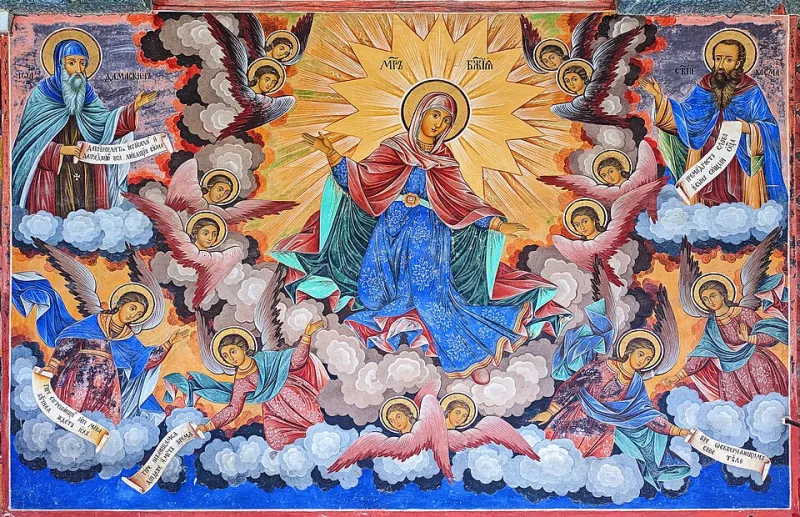
Photo: Νικόλαος Κυριακάκης, CC BY-SA 4.0, via Wikimedia Commons
In the autumn of 2023, a small Byzantine-style icon of Christ Pantocrator crossed the block at a regional auction house in New England. It had hung for more than a century in an Orthodox parish that could no longer afford its roof repairs. Within weeks, the icon was sold again — privately, to an unnamed buyer — and today its location is, for all practical purposes, unknown.
No one broke a law. No scandal followed. And that is precisely the problem.
Across the United States, sacred art is leaving public view at a pace that scholars describe as quiet, legal, and largely irreversible. The causes are structural: shrinking congregations, deferred maintenance, mergers of parishes and dioceses, and deaccession policies that treat liturgical objects as assets rather than heritage. The result is a slow-motion dispersal of one of America's least-studied artistic traditions.
The Economics of Dispersal
Religious institutions in the United States face a funding crisis that is well documented but poorly understood in its artistic dimensions. The Roman Catholic Church alone has closed or consolidated thousands of parishes since 2000, from Detroit to Buffalo to rural New England. When a building closes, its contents — altarpieces, carved retablos, sanctuary murals, imported icons — enter a gray market of estate dealers, liturgical resellers, and auction houses.
Unlike a museum deaccessioning a painting, these transactions rarely attract scrutiny. There is no acquisitions committee, no public register, no obligation to notify scholars. A nineteenth-century icon that anchored a community's devotional life may be catalogued simply as "religious plaque, oil on board" and sold for a few hundred dollars.
Dr. Elena Markovic, an art historian who has tracked the dispersal of Orthodox liturgical art in the American Midwest, puts it bluntly: "We have better records for paintings sold in eighteenth-century Venice than for icons sold at county auctions in Ohio last year."
The Documenters
A small network of conservators, graduate students, and volunteers is racing against this dispersal. Their work is unglamorous: photographing interiors before buildings are deconsecrated, creating condition reports, matching auction listings to works recorded in parish inventories decades ago.
In Chicago, a nonprofit documentation initiative has spent three years photographing the interiors of closed churches before demolition or conversion into condominiums — a fate that has become common in neighborhoods where gentrification meets demographic change. In the Southwest, conservators working with Hispano communities have begun surveying santero art, the painted and carved devotional images of New Mexico, much of which remains in private hands and family chapels where it is vulnerable to sale, damage, or simple neglect.
The urgency is real. Unlike a museum object, a work of sacred art that enters a private collection typically loses its documentation chain. Provenance gaps make future study difficult, authentication contested, and — in cases involving works with contested histories — repatriation or restitution claims nearly impossible to adjudicate.
Why Existing Models Fall Short
American cultural policy was built around museums and universities, institutions with governance structures, public charters, and — at least in theory — accountability to a public trust. Sacred art in active religious use fits none of these categories. It is owned by congregations, protected by religious-liberty considerations, and governed by internal canon law that American courts are reluctant to second-guess.
The result is a stewardship vacuum. European models offer limited guidance: much of Europe's ecclesiastical heritage sits within national inventory systems, however imperfectly enforced. In the United States, no equivalent exists. The Save America's Treasures program and various state-level historic preservation funds address buildings, not the movable art within them.
A Digitization-First Agenda
If the works themselves cannot always be kept in public view, their images, histories, and material data can be. Iconsete advocates a three-part agenda tailored to the American context:
First, a national sacred art registry. Not a seizure mechanism and not a regulatory burden — a voluntary, federated database where parishes, dioceses, and denominational bodies can record high-resolution imagery, condition assessments, and provenance for significant works. The model already exists in miniature: regional surveys of Hispanic devotional art and Jewish ceremonial objects have demonstrated both feasibility and scholarly payoff.
Second, deaccession covenants. When religious bodies do sell, denominational authorities and auction houses should be encouraged to adopt best practices: advance notice to scholars, documented provenance transfer, and first-offer agreements with partner institutions willing to keep works accessible through display or study loans.
Third, long-term stewardship partnerships. A growing number of universities — including several with strong Byzantine and early Christian studies programs — have the conservation labs, climate-controlled storage, and curatorial expertise to hold works on long-term loan while guaranteeing their liturgical dignity. Such arrangements, common in Europe, remain underused in the United States largely for want of a coordinating body and model agreements.
The Stakes
Skeptics will note that private collectors often care deeply for the objects they acquire, and this is frequently true. But private care is not public knowledge. An icon in a vault is preserved; an icon in a documented, studied, image-accessible collection is part of a civilization's ongoing conversation with itself.
America's sacred icons are not merely devotional objects. They are immigrant testimonies — carried across oceans, painted in adobe chapels, commissioned by communities building a new life while clinging to old images of the holy. When they vanish into private hands without record, we lose not only art objects but evidence: of migration, of craft traditions, of the religious imagination of ordinary American communities.
The window for documentation is closing. Buildings are being sold, contents dispersed, memories lost. What is required now is neither alarmism nor resignation, but infrastructure — registries, partnerships, and professional norms that treat sacred art as what it is: a public inheritance held, for now, in private hands.
The Pantocrator from that New England auction may never resurface. The next one still might — if we build the systems to find it first.