The Patina of Prayer: A Documentation Protocol for Devotional Wear on American Sacred Icons
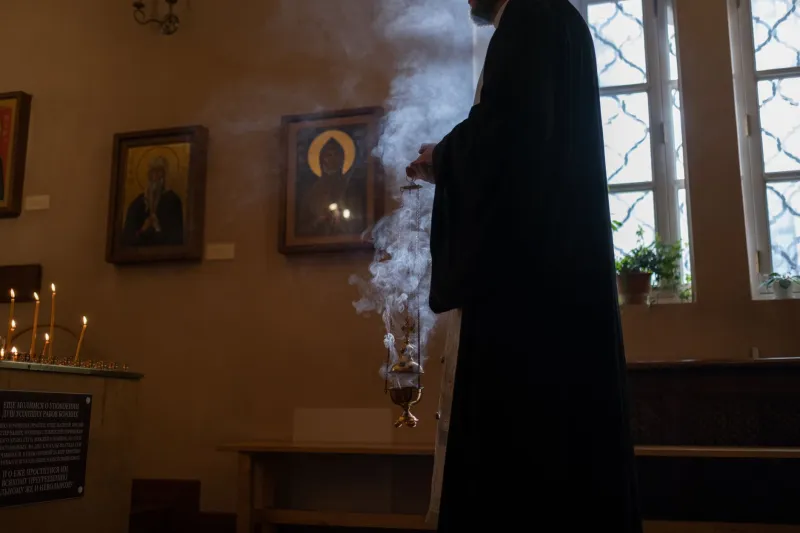
In many American parishes, the first instinct when an icon darkens is to call a conservator and ask for cleaning. The question is understandable: soot obscures color, wax drips interrupt the surface, and handling marks can look like neglect. Yet a growing body of conservation practice treats these accumulations as something more than damage. Candle smoke, fingerprint ridges, and worn gilt at the lower edge of a panel are material records of use—evidence of where the faithful stood, what they touched, and how long they prayed. For institutions weighing treatment, the central task is not simply to clean but to decide what evidence should be preserved before cleaning begins.
Wear as Evidence
Sacred icons in the United States occupy an unusual position between artwork and instrument. They are displayed, venerated, carried in procession, kissed, and touched. In Hispanic Catholic communities, in Orthodox parishes, and in museum collections that inherited devotional objects, the surface of an icon is a contact zone. Soot from votive candles settles unevenly, often heaviest near the lower register where candles burn closest. Wax splatters record the angle of a candle stand or the movement of a procession. Fingerprints in oil and dust collect at the edges and around the face and hands, the points devotees most often reach toward. These traces are not random. They are patterned by liturgy, architecture, and habit.
Conservators have long read such patterns on furniture, tools, and textiles. The same forensic attention is now being applied to religious images. A dark band at the bottom of a panel may indicate that the icon once rested on a ledge rather than hung on a wall. A cluster of touch marks near the Gospel book in a Christ Pantocrator may suggest a devotional focus that oral history can confirm or complicate. When treatment is contemplated, these details can vanish in a single swab. Documentation is therefore not an administrative afterthought but a primary act of stewardship.
A Typology of Devotional Traces
Before any cleaning test is performed, it helps to classify what is present. A simple typology can guide photography and condition notes:
- Deposits: soot, dust, incense residue, and candle grease, often graded by density and location.
- Wax and stearin: drips, pools, and spatter, with attention to color, thickness, and whether the wax sits on the surface or has penetrated cracks.
- Touch marks: fingerprints, hand oils, and abrasion from repeated contact, especially at the lower border, the central figures, and the edges of the panel.
- Handling patina: polished areas on frames, ripples in canvas, or worn gilding that indicate how the object was lifted, carried, or processed.
- Repair traces: older retouching, staples, nails, or backing materials that show prior interventions and may themselves be historically significant.
This vocabulary allows a small parish team to describe what they see without overinterpreting it. The aim is not to assign blame for neglect but to record a biography of use.
The Documentation Protocol
A workable protocol for a parish or small museum need not be expensive. It does require consistency and a willingness to slow down before treatment.
1. Baseline photography under visible and raking light
Photograph the icon straight on, then at oblique angles with a low raking light. Raking light reveals surface topography: wax ridges, dust accumulation, and the slight depressions left by repeated touching. Include a scale and color target in each frame. Record the camera position and light angle so that later comparisons are possible.
2. Ultraviolet and infrared imaging
Ultraviolet fluorescence can distinguish aged varnish from later retouching and can make some organic deposits visible. Infrared imaging may reveal underdrawing or earlier compositions beneath the surface. Neither technique requires a laboratory; many regional conservation centers offer documentation services or lend equipment to affiliated institutions.
3. Condition mapping and annotated diagrams
Print a photograph of the icon and mark the locations of soot, wax, touch marks, and abrasion directly on the image. Use a simple key and write the date, photographer, and examiner on the sheet. Store the map with the object's file and, where possible, with a copy in the diocesan or institutional archive.
4. Oral history collection
Ask the sacristan, the longtime parishioner, the custodian, and the clergy what they remember. When was the icon placed here? Was it ever carried in procession? Did a candle stand once stand closer? Has it been moved, stored, or repaired? Oral testimony can explain a wear pattern that photographs alone cannot. Record the interviews with consent and transcribe key passages.
5. Targeted sampling and analysis
If cleaning is proposed, a conservator may take micro-samples to identify the deposit and the underlying coating. Analysis can determine whether the soot is superficial or bound into a failing varnish, and whether the wax contains materials that complicate removal. Sampling should be minimal and documented.
From Record to Treatment Decision
Documentation does not forbid cleaning. It informs it. A parish may decide that heavy soot obscures the icon's legibility and should be reduced, while a distinctive ring of wax at the base is retained as a historical feature. A museum may choose to stabilize rather than clean, preserving touch marks as part of the object's meaning. The key is that the decision is made with a record in hand, not after the evidence has been removed.
Treatment proposals should state explicitly which traces will be reduced, which will be retained, and why. Where cleaning is approved, conservators can often work around significant marks rather than erase them. In some cases, a small area of soot or wax can be left in place as a deliberate sample of the icon's devotional life.
Ethical Stewardship
Preserving sacred images sometimes means preserving the traces of the faithful who prayed before them. That principle does not diminish the importance of conservation; it deepens it. An icon cleaned to an imagined original state may be visually brighter but historically thinner. For American parishes and small museums, the most responsible course is often modest: photograph carefully, map what is present, record what people remember, and consult a conservator before acting. The soot is not only dirt. It is a signature, and it deserves to be read before it is wiped away.