The Permission Ledger: Digital Stewardship of Parish Icons and the Claims That Travel With Them

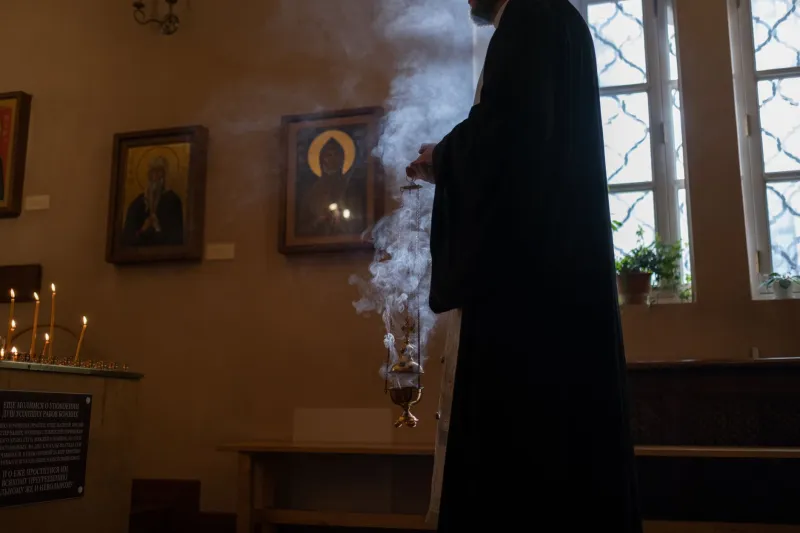
Photo: church archive digitization sacred icon scanner conservation, via i.pinimg.com
Digitization is often described as a technical service: capture, catalogue, publish. For sacred icons held by parishes, that description is incomplete. The object on the scan bed is not only painted wood and gesso; it is a devotional focus, a record of communal memory, and sometimes a legal asset whose ownership is less settled than the project timeline assumes. A nonprofit that digitizes parish-owned icons for research, exhibitions, or online archives therefore enters a field of claims that predate the scanner. The central question is not simply who owns the image, but who is entitled to decide how its reproduction travels.
The Layered Rights in a Single Icon
In the United States, copyright and physical ownership are separate. A parish may own the panel, its frame, and its place in the nave without holding the copyright in the painted image. An artist commissioned to write an icon may retain reproduction rights, or may have assigned them in a contract that no one now can find. A donor may have given the icon to the parish while reserving certain uses. And the digital file itself—the scan, the color target, the metadata—may attract its own rights and obligations, depending on how the work was created and by whom.
These distinctions matter because digitization is reproduction. A high-resolution image published online can be copied, printed, and reused in ways that a parish never contemplated. A faithful photographic reproduction of a two-dimensional public-domain work may not create a new copyright in the underlying image, but the surrounding file, descriptive record, and database may still be governed by contract, license, or institutional policy. The prudent assumption is not that everything is clear, but that nothing should be published until the rights layer has been examined.
Donor Restrictions Are Promises, Not Paperwork
Deeds of gift and donor agreements often contain language that directly affects digitization: restrictions on reproduction, requirements that images remain in a designated space, or limits on commercial use. Such conditions can outlive the donor and the original project staff. They are not obstacles to be argued away; they are promises made by the institution that accepted the gift. When a restriction is ambiguous, the right response is documented inquiry—conversation with the parish, review of accession records, and, where necessary, a written clarification with the donor or the donor’s heirs.
A permission ledger is useful here. It records, for each object, who owns the physical item, who claims copyright, what restrictions attach, who may grant permission, and what uses have been authorized. The ledger need not be elaborate, but it should be authoritative. It converts scattered correspondence into governance.
Consent Is a Continuing Relationship
Community consent is not a single signature at the bottom of a release form. For parish-owned icons, the relevant community may include clergy, lay councils, longstanding parishioners, recent immigrants who brought devotional practices with them, and descendants of donors. These groups do not always speak with one voice, and the person with legal authority may not be the person with cultural authority. A digitization program that treats consent as a one-time transaction risks securing the file while losing the relationship.
Informed consent means explaining what will be captured, where it will appear, who will be able to see it, and how long it will remain available. It also means allowing refusal without penalty. Some images may be suitable for scholarly study but not for open web publication; others may carry seasonal or liturgical restrictions that are invisible to an outside cataloguer. The parish should be able to say no to a use without fearing that the entire project will be withdrawn.
Access Is Not a Binary
Open access is a powerful value, but it is not the only value. A tiered access policy can distinguish between public thumbnails, restricted scholarly viewing, on-site consultation, and embargoed materials. Metadata can flag images that require community review before publication. A takedown procedure gives parishes a clear route to request removal or restriction when circumstances change. None of this diminishes research value; it makes the archive more durable because it is more trustworthy.
Access policies should also address the difference between preservation copies and presentation copies. The master file may be retained for conservation research under controlled conditions, while the public interface shows a lower-resolution image with clear rights information. This is not secrecy for its own sake. It is stewardship calibrated to the object and the community.
A Practical Checklist for US Heritage Organizations
- Inventory rights before capture: identify the physical owner, likely copyright holder, donor restrictions, and any artist contacts.
- Map the stewards: record who can speak for the parish or community, how decisions are made, and what constitutes consent.
- Use a written digitization agreement that states the scope of capture, storage, publication, derivative uses, and termination.
- Define access tiers and mark restricted records in the cataloguing system.
- Establish a takedown and review process with a named contact and a stated response time.
- Document diligence for orphaned or unclear rights; do not publish on the assumption that no one will object.
- Budget for rights review as a conservation cost, not an administrative afterthought.
- Audit the permission ledger annually and after any change in parish leadership.
The work of preserving sacred images is also the work of preserving the trust that allows them to be studied. An archive built on a permission ledger will be slower and perhaps smaller than one built on unchecked ingestion. It will also be more honest about what it holds and more likely to endure. For Iconsete and kindred organizations, that is not a constraint on scholarship; it is the condition of it.