The Theology of the Unblinking Eye: How Byzantine Icon Painters Engineered a Gaze That Outlived Empires
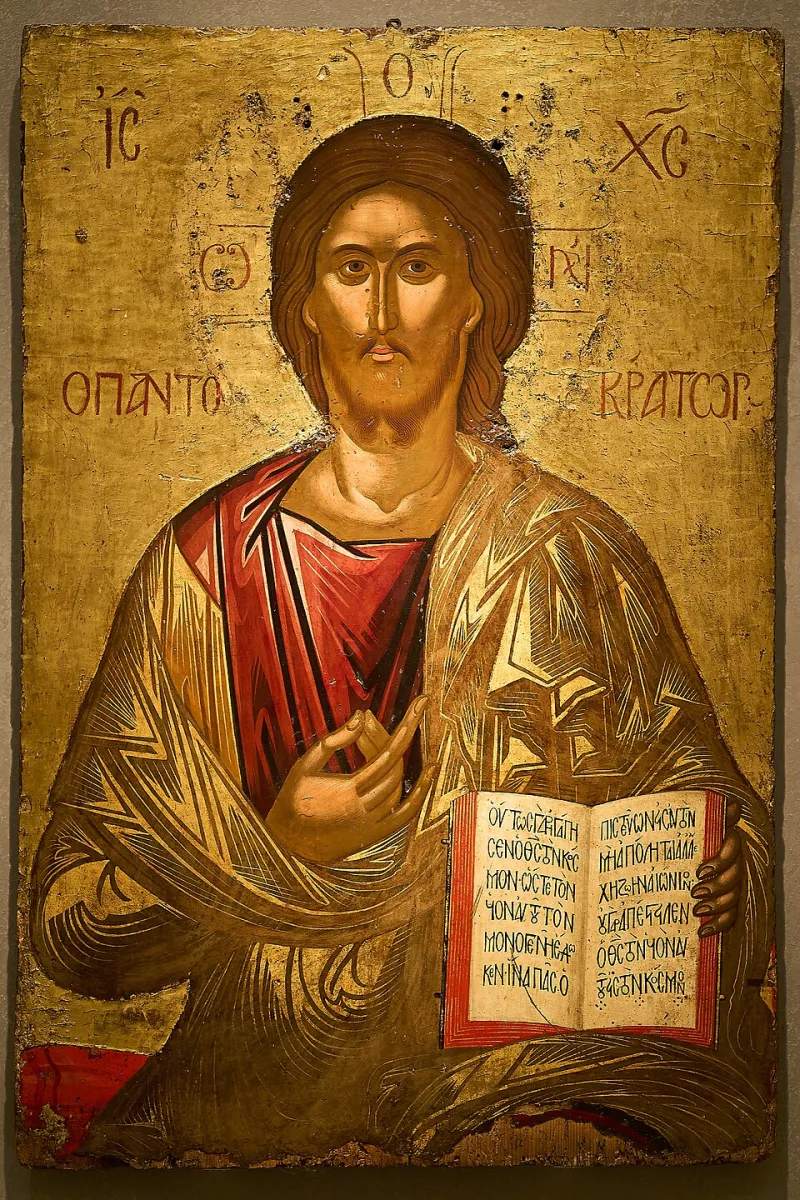
Photo: George E. Koronaios, CC BY-SA 4.0, via Wikimedia Commons
Visitors to the Byzantine collections at Dumbarton Oaks in Washington, or to the rotating exhibitions of icons at the Metropolitan Museum of Art, often report the same uncanny sensation: the figures seem to be watching them. It is tempting to dismiss this as projection, a modern audience inventing intimacy where none was intended. The evidence of the icons themselves suggests otherwise. The direct gaze in Eastern Christian sacred imagery was not an accident of style. It was a deliberate, codified technology of encounter, engineered by painters who understood something about human attention that cognitive scientists are still mapping today.
When Looking Back Was Doctrine
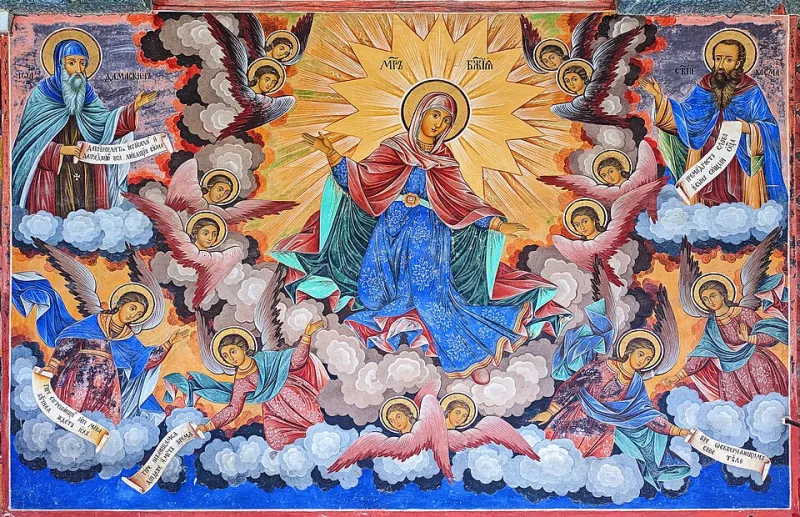
In the visual culture of the late antique and Byzantine Mediterranean, the direction of a figure's eyes carried theological weight. A figure shown in profile, eyes averted, occupied the world of narrative: a participant in history, caught mid-action, opaque to the viewer. A figure shown frontally, eyes fixed on the observer, occupied a different register entirely. This was the register of presence, of the subject who sees you even as you see them.
The convention crystallized in the icons of Christ Pantocrator, the "Ruler of All," whose frontal, symmetrical face dominates the domes and apses of churches from Constantinople to Sinai. The best-known example, the sixth-century Pantocrator at Saint Catherine's Monastery, encaustic on wood and one of the oldest surviving icons in the world, presents a face that is subtly asymmetric: one eye gentle, the other piercing. Whether the asymmetry was intentional or the product of centuries of overpainting, generations of viewers have read it as deliberate, a face holding both judgment and mercy in a single look.
What matters for our purposes is the grammar behind the choice. Byzantine painters and the theologians who advised them treated the gaze as a site of exchange. The frontality of the icon was tied to the doctrine of the Incarnation: because God became visible in Christ, the sacred could legitimately be depicted, and depiction could legitimately look back. Iconophile writers during the eighth- and ninth-century controversies over images argued that the icon participated in a real relationship with its prototype. The gaze was the visible edge of that argument.
Encoding Meaning in Millimeters
The conventions governing sacred portraiture were remarkably precise, and conservators who clean and examine these panels encounter their logic at the level of millimeters.
Scale signaled spiritual hierarchy. Christ, the Virgin, and major saints were rendered larger than narrative figures; the eye of a Pantocrator in a dome might be several times the size of a donor's entire face in the same composition. The viewer's attention was rationed accordingly.
Eye direction mapped the cosmos. Figures within a scene looked toward one another, or toward Christ, creating circuits of attention that guided the viewer's own eye through the theology of the image. Only the figure with the authority to address the viewer directly, usually Christ or the Virgin, received the frontal gaze. Everything else in the composition funneled toward it.
The eyebrows and iris placement were standardized. In mature Byzantine practice, the large, almond-shaped eye with its elongated outer corner and heavy upper lid was not realism but rhetoric. The slightly enlarged, upward-tilted eyes of many saints suggested contemplation, the inward vision of the ascetic, even as the frontal head position addressed the viewer. The tension between the two, an inward-looking eye in an outward-looking face, is one of the signature achievements of the tradition.
Highlighting was structural, not decorative. Painters placed white highlights at the inner corner of the eye and along the lower lid to make the eye appear to emit light, reversing the natural direction of illumination. In a candlelit church, the effect was startling: faces that seemed to generate their own glow.
Why the Gaze Still Works on Us
The reason these conventions retain their grip on modern viewers is not mystical. It is neurological and social. Human beings are wired from infancy to track eyes and to read direct gaze as a signal of communication, an invitation, or a claim on our attention. Studies in face perception consistently show that a direct gaze triggers heightened processing: we remember faces better, we evaluate them more intensely, and we feel observed.
Byzantine painters, without the vocabulary of cognitive science, exploited this machinery with great sophistication. Their successors did too. Renaissance portraiture in Italy and Northern Europe inherited the frontal gaze as a marker of dignity and presence, and it passed from there into the grammar of Western photography. When an American viewer stands before a nineteenth-century daguerreotype or scrolls past a portrait on a phone screen, the same perceptual circuitry fires. The direct gaze says: you are the one being addressed.
This continuity is precisely why the conservation of icon panels matters beyond the community of specialists. These are not merely devotional objects or art-historical documents. They are among the earliest surviving laboratories of visual psychology, records of how one civilization systematically experimented with the most powerful instrument in human communication.
Stewarding a Look That Has Lasted a Millennium
The material fragility of these works is sobering. Most icons are tempera or encaustic on wood panels, vulnerable to fluctuations in humidity, to the warping of their wooden supports, and to the flaking of paint layers that separate ground from image. Institutions across the United States, from university museums to Orthodox monasteries with small but significant collections, face the same challenge: stabilizing objects whose meaning depends on details, a highlight in an eye, a line of the brow, that a careless treatment can erase forever.
Conservation, in this light, is not merely technical work. It is the preservation of a conversation that has run unbroken for over a thousand years, from a painter's brush in a Constantinopolitan workshop to a visitor's unplanned pause in a museum gallery. The gaze that follows us across a millennium survives only as long as the surface that carries it.
To read the eyes of a Byzantine icon is to recognize a shared inheritance: the conviction that an image can look back, and that in being seen by it, something in the viewer is changed. Our task is to make sure the look endures.