Seven Quiet Rooms: Small American Collections Where Sacred Icons Await Scholars
Photo: William Henry Jackson, Public domain, via Wikimedia Commons
The study of sacred icons in the United States has been shaped, understandably, by its largest collections. That concentration has produced excellent scholarship and a distorted picture, because the majority of American icons sit in small rooms — converted rectories, diocesan archives, university libraries, monastery museums — where the catalogue is a card file, the environmental control is a window unit, and the curator is a volunteer with a day job.
These seven collections are not ranked. They are listed because each holds material that is under-published, accessible by appointment, and at genuine risk of being bypassed by the next generation of researchers. Visitors should confirm hours and access policies directly; most of these institutions welcome scholars and almost none can accommodate walk-in traffic.
1. The Icon Museum and Study Center, Clinton, Massachusetts
The largest collection of Russian icons in North America sits in a former mill town an hour west of Boston, and its study center has quietly become the most useful English-language resource in the field. The permanent galleries are instructive, but the reason a scholar detours here is the reference library and the willingness of staff to discuss attribution questions. For a graduate student preparing a first catalogue entry, a day here substitutes for a week of scattered reading.
2. The Museum of Russian Art, Minneapolis
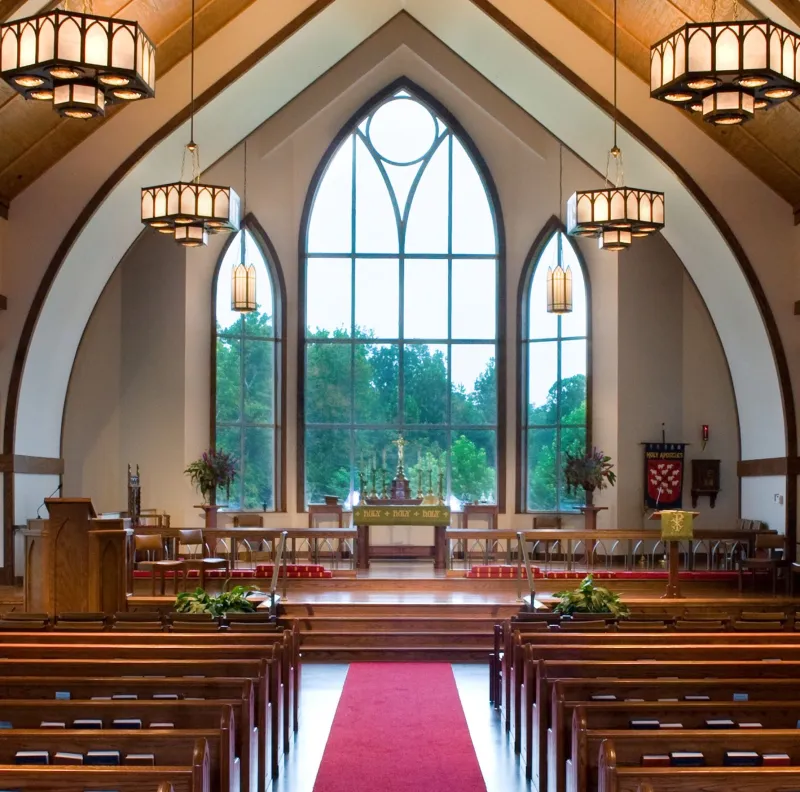
Housed in a converted church — an architectural irony that repays attention — this institution pairs icons with a broader program of Russian and Soviet art. Its icon holdings are strongest in later imperial material, which makes it a productive counterweight to collections dominated by earlier panels. The gallery's domestic scale allows close looking, and the interpretive materials are unusually candid about the limits of their own attributions.
3. Alaska State Museum, Juneau
This is the essential collection for anyone studying the Orthodox presence in North America, and it is among the least visited by outside scholars. The Russian-era material from Kodiak, Sitka, and the Kenai Peninsula documents a missionary icon tradition shaped by distance, weather, and indigenous congregational life. The objects raise questions that have barely been asked in print: what happens to a devotional image when its pigments must be sourced across an ocean, and how does a local workshop make Byzantine conventions legible to a congregation that has never seen a Byzantine church?
4. St. Photios Greek Orthodox National Shrine, St. Augustine, Florida
A small shrine in the oldest continuously settled European city in the United States holds a collection of icons and religious objects tied to the Greek experience in the Americas. The scale is domestic rather than museological, which is precisely the point: the display reveals how icons function in the life of a diaspora community rather than how they function in a gallery. Conservation here proceeds on parish resources, and a donor interested in high-leverage support will find few better targets.
5. Museum of Russian History, Holy Trinity Monastery, Jordanville, New York
A working monastery in upstate New York maintains a museum of emigre religious and cultural material, including icons, liturgical textiles, and books produced in displacement. For the study of twentieth-century icon painting outside Russia, this collection is foundational and thinly documented. Access requires advance arrangements and an awareness that the museum serves a monastic community first; researchers who arrive with patience find material that appears in no published survey.
6. Ukrainian National Museum, Chicago
Chicago's Ukrainian community has preserved icons, vestments, and church furnishings across more than a century of immigration, war, and resettlement. The museum's holdings are unevenly catalogued but unusually rich in parish-level material — the images a congregation actually worshipped before, rather than the pieces a dealer thought worth exporting. Provenance work here means reading community newspapers and parish jubilee books, a method with applications far beyond the Midwest.
7. The Marian Library, University of Dayton, Ohio
An academic collection devoted to Marian art and devotion holds a small but instructive group of icons within a much larger body of material. Its value to scholars lies in arrangement: icons sit alongside prints, medals, and devotional publications, allowing a researcher to study how a painted image circulates as a reproduced, adapted, and domestically displayed object. Few collections make that comparison easy.
What These Rooms Ask of Visitors
A scholar planning a detour should write ahead, describe the research question precisely, and ask what is actually catalogued rather than what is held. Arrive with a copy stand, a color target, and a willingness to leave images with the institution — small collections frequently lack photographs of their own objects, and a researcher's files are often the only record. Ask about storage before asking about display; the answer usually identifies the most urgent need.
For donors and local stewards, the lesson is different but related. The most effective gift to a collection of this size is rarely an object. It is a properly funded environmental upgrade, a contracted cataloguing project, or an endowment for a part-time registrar. And for the field as a whole, the argument is simply stated: the history of sacred art in America will not be written from the metropolitan museums alone. It will be written from seven rooms like these, by people who thought to knock.