Frescoes Between the Parking Lots: Documenting America's Suburban Icon Walls
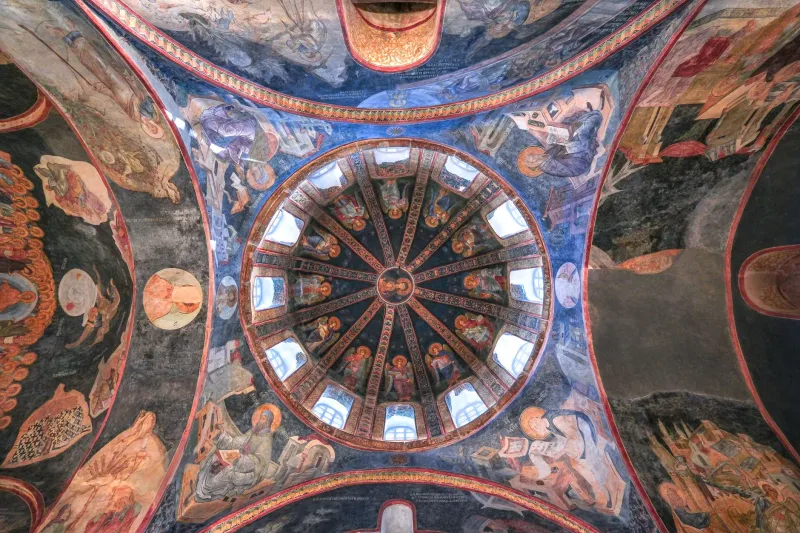
From the highway, the Church of the Annunciation in a suburb outside Cleveland looks like any number of mid-century commercial buildings: aluminum-framed windows, a low roofline, a sign out front with removable letters. Inside, however, the walls have been transformed over the past decade into a continuous narrative of gold, pigment, and theological argument — a full iconographic program executed in the Byzantine manner by a painter trained on Mount Athos.
This juxtaposition is not an anomaly. It is one of the dominant, and least examined, patterns in contemporary American religious art.
A Census Nobody Has Taken
Orthodox Christianity in the United States has grown substantially since the immigration reforms of 1965, and its built landscape reflects that growth. Greek, Romanian, Serbian, and Coptic parishes — many established in the 1960s and 1970s in rented halls, former Lutheran sanctuaries, or outright commercial structures — have spent the last three decades commissioning large-scale iconographic programs. Some cover a few hundred square feet; others envelop the entire interior in the manner of Balkan and Levantine church decoration.
No comprehensive inventory of this work exists. Unlike the WPA murals catalogued by the General Services Administration or the mid-century modernist churches documented by preservation societies, these frescoes fall between institutional categories. They are too new for most art historians of the medieval tradition, too liturgically specific for surveys of American painting, and too geographically dispersed for any single diocese to track systematically.
The result is a paradox: one of the largest sustained bodies of commissioned sacred art in the Western Hemisphere is being created, completed, and — in some cases — repainted or demolished without a single photograph entering a public archive.
From the Holy Mountain to the Interstate
The supply chain for this iconography is remarkably direct. Iconographers trained in the workshops of Athos, Thessaloniki, and Bucharest travel to parishes in Houston, Detroit, and Portland, sometimes returning annually for years as funds permit. A typical program proceeds in phases: the sanctuary apse first, then the nave vaults, then the narthex, with donors sponsoring individual figures — a practice that echoes patronage structures from the Byzantine provinces a millennium ago.
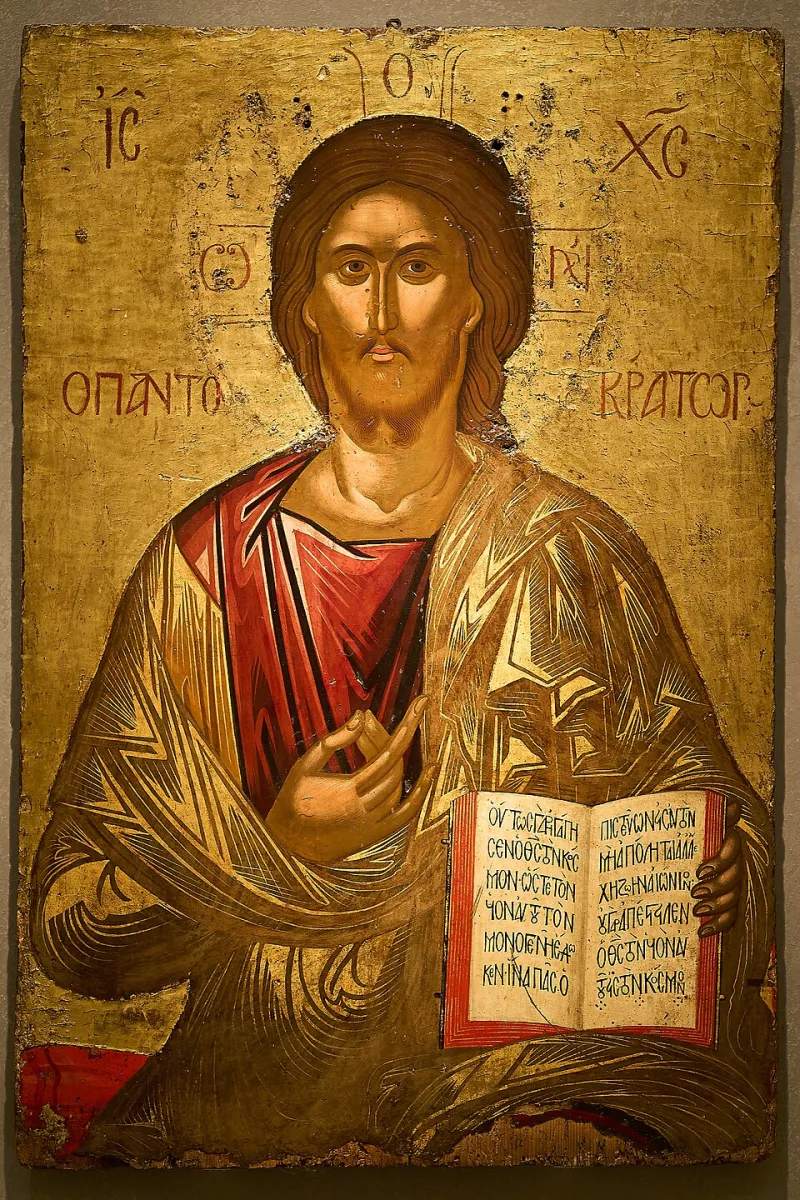
The painters themselves occupy a complicated position. Several we spoke with described working twelve-hour days on scaffolding in buildings with inadequate ventilation, in parishes that are often their only American clients. Their work is simultaneously traditional — adhering to the compositional canons of the Palaiologan era — and entirely contemporary in circumstance: air-conditioned suburban sanctuaries, donor plaques, building committees.
Why the Silence?
Three factors explain the scholarly blind spot. First, denominational insularity: Orthodox iconography is studied within theological faculties, while American art history remains largely secular in its institutional framing. Second, the buildings themselves — the unloved architecture of the periphery resists the romance attached to stone cathedrals. Third, and most urgently, time. Coptic parishes in particular have expanded so quickly that programs painted in the 1990s are already being altered, and at least two full cycles we documented have been lost to renovation within the past five years.
The Stewardship Imperative
Iconsete has begun a pilot documentation project, partnering with three Midwestern parishes to create archival photography, painter interviews, and condition reports for programs completed before 2010. The model is simple and inexpensive: high-resolution capture, standardized metadata, and deposit with a university archive.
What hangs in the balance is not merely aesthetic. These interiors represent a living continuation of a tradition that survived exile, communism, and diaspora — painted by hand, by living masters, into the unlikeliest of American settings. If scholarship waits for these buildings to become old enough to matter, the record will already have gaps where the frescoes used to be.
The walls between the parking lots deserve better than to vanish unremarked.