What the Suitcase Carried: A Field Guide to Recording the Stories Behind Immigrant Parish Icons
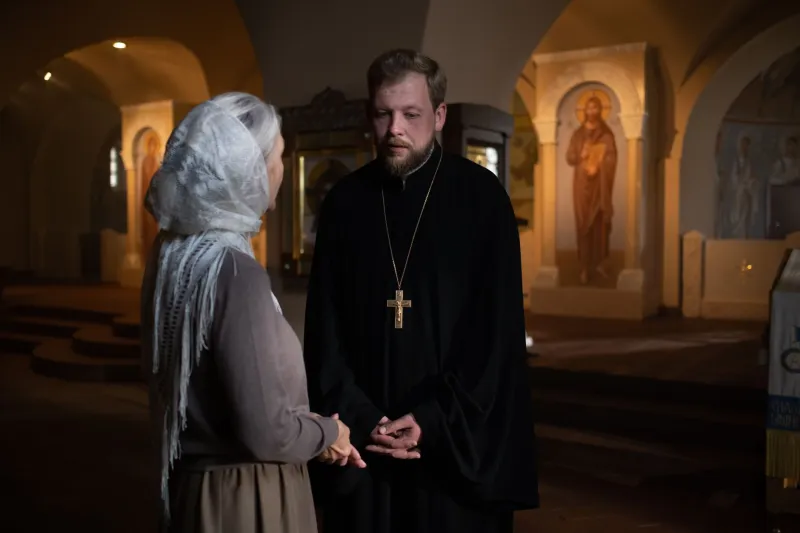
Ask almost any pastor of an older immigrant congregation where the icons in the sanctuary came from, and the answer begins with a person rather than a date. A grandmother who wrapped a panel in a cotton slipcase. A choirmaster who carried a framed print through a displaced persons camp. A parish committee that pooled $400 in 1978 to commission a local painter because the old country was out of reach. These are not footnotes to an object's history; in many parishes, they are the only provenance that exists.
The panel itself survives quite well without them. Wood, gesso, pigment, and gold are patient materials. Memory is not. And so a documentation effort now taking shape among parish archives, diocesan historical commissions, and university preservation programs has a single organizing premise: before the icons are treated, they should be asked about—and the asking should be done while the people who remember are still here to answer.
The Gap Between the Object and Its Meaning
Conservation practice has become remarkably good at reading surfaces. Conservators can distinguish a nineteenth-century overpaint from an original layer, identify a pigment's geological source, and date a linen support with reasonable confidence. What no laboratory can recover is the reason a family chose that particular icon of the Theotokos to carry rather than the one left behind, or why a congregation kept a water-damaged panel in the narthex for thirty years instead of retiring it.
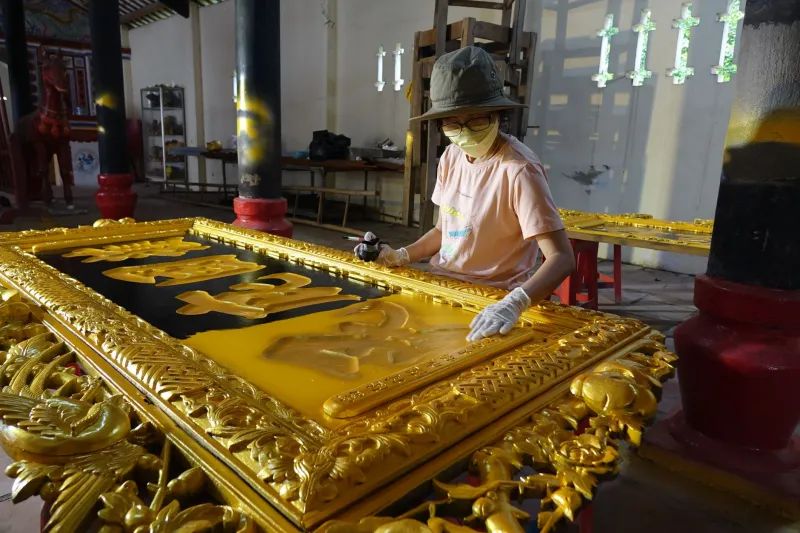
That asymmetry is the ethical case for oral history. An object stabilized and hung in a climate-controlled case, with no record of who prayed before it and what they asked for, has been preserved and simultaneously diminished. The aim of a parish oral history program is not nostalgia. It is the completion of a conservation record—an accession file that includes testimony alongside condition notes.
Designing the Interview Around the Object
The most productive interviews are object-centered rather than biography-centered. A narrator asked to summarize a life will produce chronology; a narrator asked to describe a specific panel will produce detail.
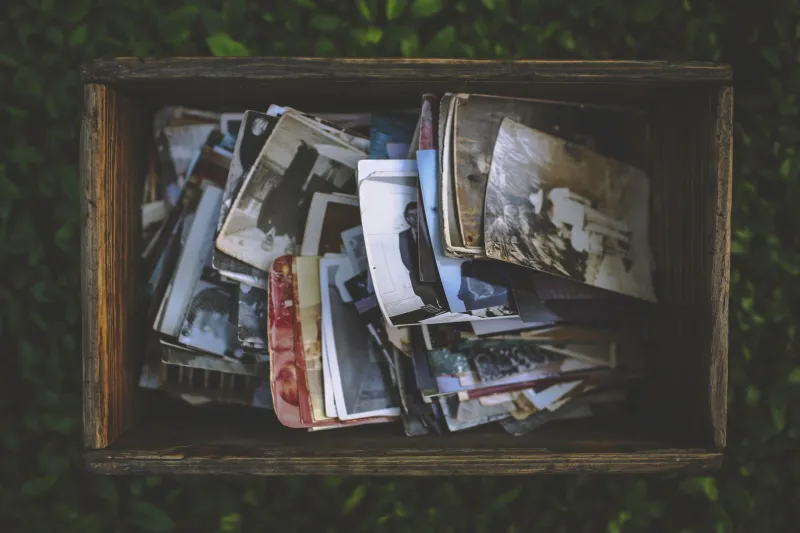
A working protocol has four parts. First, pre-interview documentation: photograph the object from all sides, note dimensions, inscriptions, labels, and any paper ephemera tucked behind the panel, and record the parish's own inventory number if one exists. Second, a set of fixed questions asked of every narrator, so that answers can be compared across a collection: How did this icon come into your care? Who has prayed before it? Has it ever been moved, damaged, or repaired, and by whom? What do you want the next person who cares for it to know? Third, open follow-ups that let the narrator set the terms. Fourth, a closing invitation to identify other people who should be recorded—an informal chain that often reaches community members no institutional list includes.
Interviews should run sixty to ninety minutes, be recorded in a single session where possible, and be conducted in the narrator's preferred language. That last point is not a courtesy but a methodological requirement. A narrator translating a memory into English in real time is editing it.
Consent as a Continuing Relationship
Oral history consent is not a signature collected at the door. A defensible practice offers narrators tiered release options—public access, parish-and-researcher access, or restricted until a stated date—and explains each in plain language. Narrators should be given the opportunity to review a transcript or summary of their recording and to correct names, dates, and places. They should also be told, without hedging, that they may withdraw.
Where university partners are involved, institutional review requirements may apply, but the deeper obligations are ethical rather than regulatory. Congregations hold narratives collectively as well as individually; a story about an icon may belong to a family, a choir, and a parish board at once. Researchers working in this space should expect to negotiate access with more than one party and should be transparent about who will control the resulting files.
Metadata That Can Travel
Recordings without description become unsearchable within a decade. A parish-level metadata schema should be modest but consistent: narrator name as written by the narrator, date and place of recording, language and script of the interview, an English abstract, object identifiers linking testimony to the conservation file, and a rights statement.
Three practices repay the effort. Capture names in the original script alongside a transliteration standard, so that a narrator recorded as Екатерина is findable as Kateryna. Use a controlled list for object types and liturgical subjects rather than free text, so that fifty parishes describe an icon of the Nativity the same way. And record place names with a date, since the town a family left in 1944 may sit in a different country today.
Distinguish, finally, between provenance and origin story. Provenance is the chain of custody; origin story is the meaning assigned along that chain. Both belong in the record, in separate fields.
A Short Checklist for Supporters
- Identify the three oldest living members of a congregation and the three objects they mention first.
- Secure a recording device, a quiet room, and an interpreter if needed—preferably not a family member.
- Photograph objects before any treatment and store images with the testimony, not apart from it.
- Provide each narrator with a copy of their own recording.
- Deposit duplicate files with a local historical society or diocesan archive, with the parish retaining control.
The Cost of Waiting
The suitcase icons of American parishes are not, for the most part, masterworks. Many are modest panels, prints, or commissions by itinerant painters. Their value is evidentiary. They record what faith communities chose to bring when leaving was sudden and what they chose to commission once they had arrived.
That testimony has a shelf life measured in a single generation. Conservation without memory risks producing a well-preserved object and an empty file. The remedy is unglamorous and available today: a recorder, a consent form, an hour of someone's afternoon, and the discipline to ask before the last person who remembers has gone.